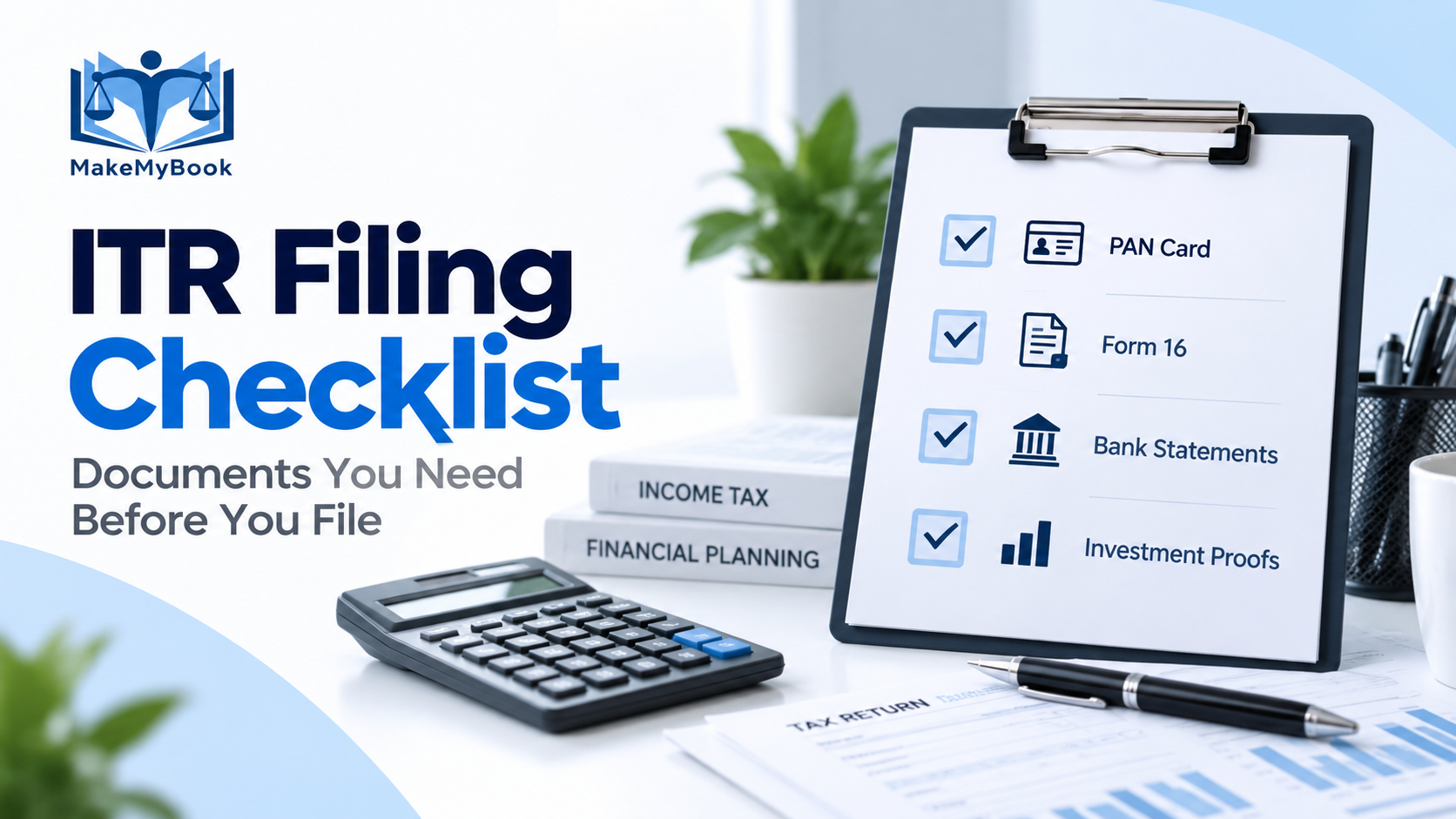
Every filing season, the same pattern repeats: people start their ITR filing, realize halfway through that they’re missing a document, and either delay filing or submit something incomplete. Filing gets slow and error-prone when documents are gathered at the last minute instead of ahead of time. Here’s a checklist broken down by income type, so you know exactly what to have ready before you sit down to file — or before you send documents to your consultant.
For Salaried Individuals
- Form 16 from your employer — this summarizes your salary, TDS deducted, and any exemptions already accounted for
- Salary slips for the financial year, useful for cross-checking Form 16 figures
- Bank interest certificates from every savings account and fixed deposit you hold
- Investment proofs for deductions under Section 80C (PPF, ELSS, life insurance) and 80D (health insurance premiums)
- Form 26AS / Annual Information Statement (AIS) — download this from the income tax e-filing portal to cross-check TDS actually deposited against what your employer reported
For Freelancers and Professionals
- Bank statements for the full financial year, across all accounts used for business income
- TDS certificates (Form 16A) from clients who deducted tax at source on your payments
- Form 26AS/AIS to verify all TDS entries match what clients have actually deposited
- Expense records — anything you’re claiming as a business expense needs supporting invoices or receipts
- GST returns, if you’re GST-registered, since your reported turnover should align across both filings
For Business Owners
- Profit & Loss statement and Balance Sheet for the financial year
- GST returns filed through the year, for reconciliation against reported turnover
- TDS certificates for any tax deducted on payments received or paid
- Loan and interest statements, especially for business loans where interest is a deductible expense
- Depreciation schedule for any business assets, if not already maintained by your accountant
Documents Everyone Needs, Regardless of Income Type
- PAN card
- Aadhaar card (linked to PAN, as required)
- Bank account details for the account where you want any refund credited
- Last year’s ITR, purely for reference — helps catch anything that changed or was missed
A Few Things Worth Double-Checking Before You File
Beyond just gathering documents, it’s worth verifying a couple of things that commonly cause delays or notices later. First, make sure your Form 26AS/AIS actually matches what you’re reporting — discrepancies here are one of the most common triggers for a follow-up notice from the department. Second, if you’ve changed jobs during the year, make sure you have Form 16 from every employer, not just your most recent one, since combined income determines your tax slab.
If you have income you’re unsure how to classify — say, a freelance side income alongside a salaried job, or capital gains from investments — it’s worth getting a second opinion before filing rather than after. Our ITR filing service handles exactly these mixed-income situations regularly, and we’ll flag anything that needs clarification before submission, not after a notice shows up.
Getting Ready in Advance Pays Off
Most of the stress around ITR filing comes from starting the process too close to the deadline. Getting these documents ready in advance usually cuts filing time in half, and gives you room to actually think through deductions and exemptions instead of rushing to hit the due date. Check our GST & ITR due dates page for the current filing deadlines, or get help filing your ITR if you’d rather hand the whole process to someone else.